

The Project
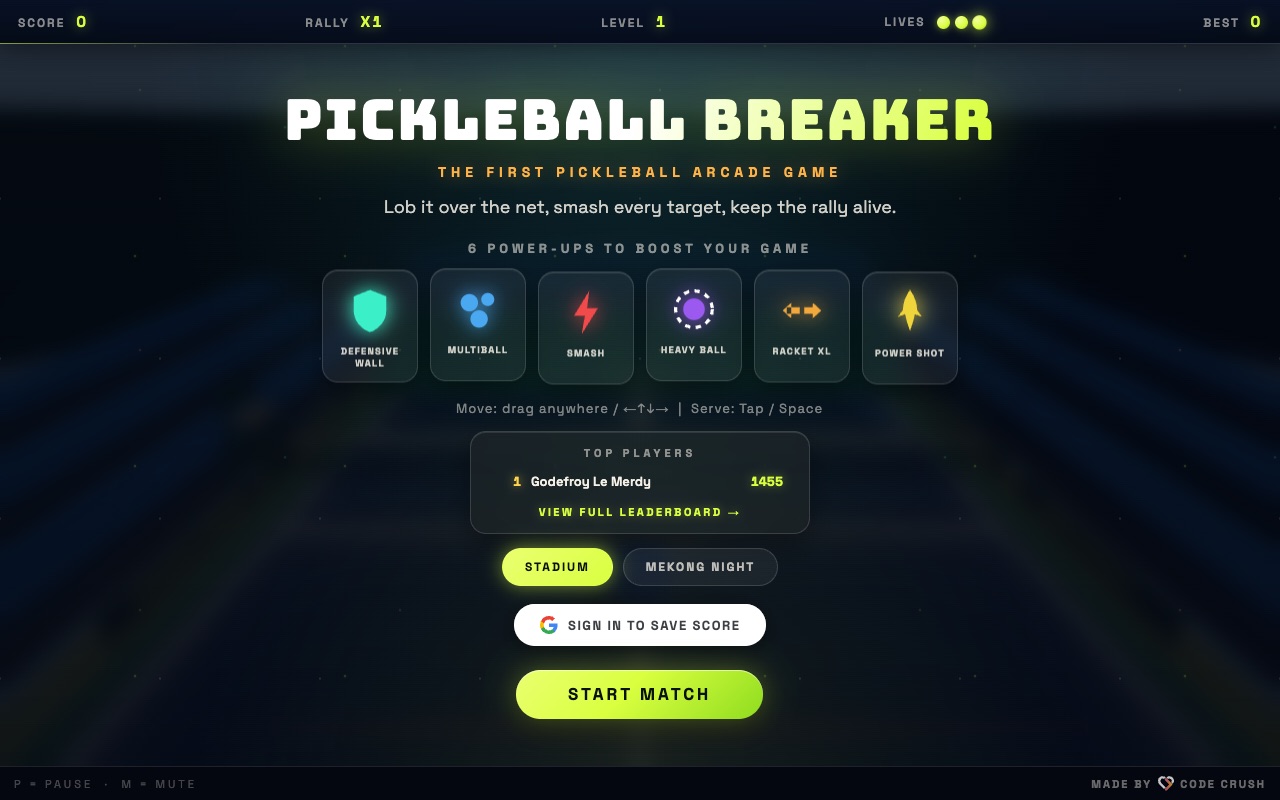
Pickleball Breaker is the first arcade game built around pickleball — and it's playable right now at pickleball.sportkation.com. We designed and built it for Sportkation, a pickleball retreat in Vietnam's Mekong Delta, as a way to put their courts in everyone's pocket.
The concept is a Breakout-style rally game: lob the ball over the net, smash every target on the far side, and keep the rally alive as the pace picks up. It runs entirely in the browser — no app store, no download, no signup — on phone, tablet, or laptop. One tap and you're on court.
The Brief
Sportkation's mission is to grow pickleball in Vietnam — but not everyone can drive out to the Mekong Delta on a Tuesday night. They asked us for:
A game that feels like their place — the palms, the floodlights, the delta nights — that anyone can play instantly from a link, that's competitive enough to come back to, and that runs beautifully on the phones people actually own.
Three hard constraints followed: zero install (every app-store click loses half the audience), mobile-first (their audience is on phones, and iOS Safari kills heavyweight pages), and a real leaderboard (bragging rights are the retention loop).
How We Built It
Real-time 3D, zero install
The whole game is rendered live with WebGL (Three.js) — the court, the paddles, the crowds, the works. That's what lets it run like a native app but spread like a link in a text message, the same approach behind our brand campaigns.
A digital twin of the resort
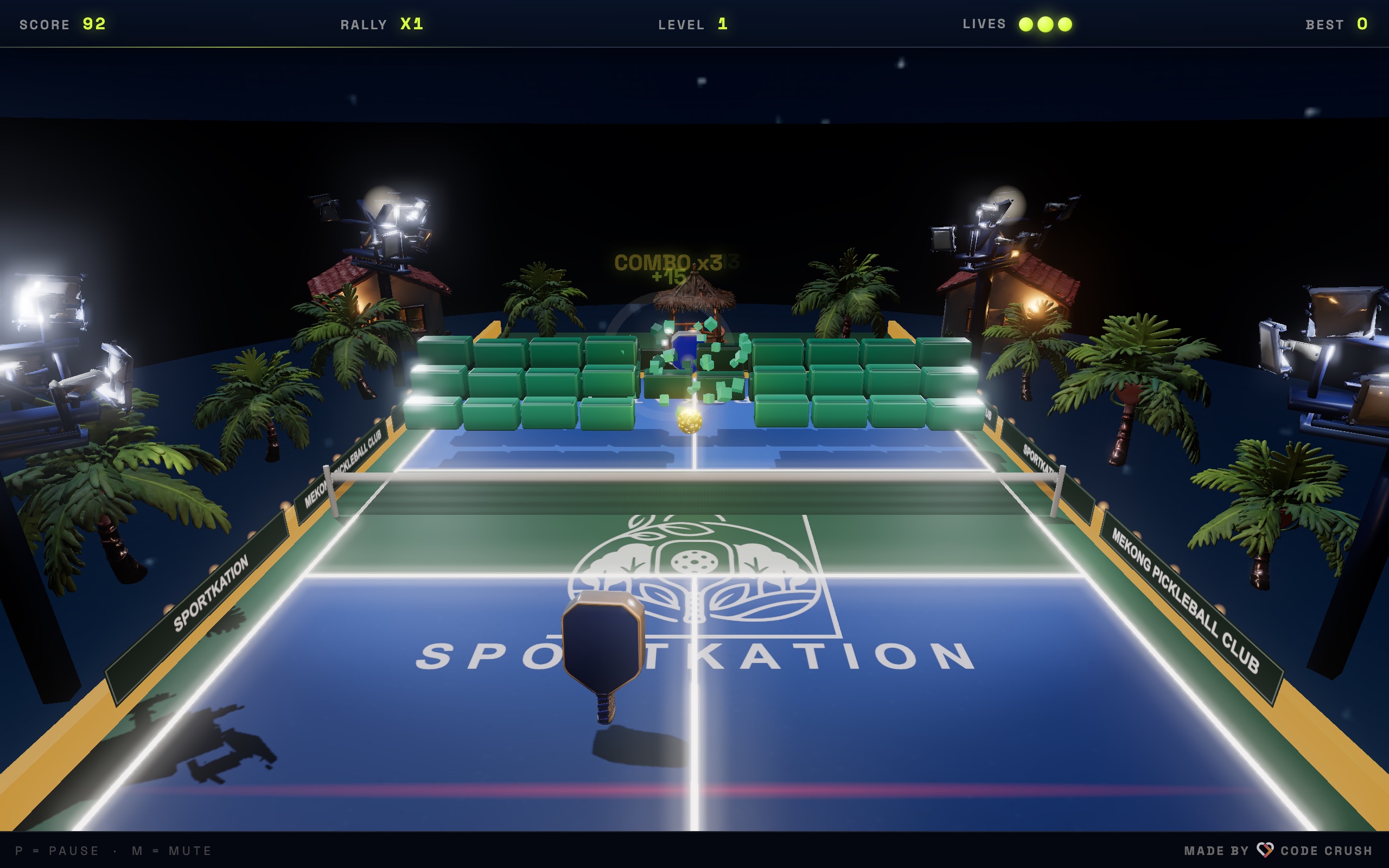
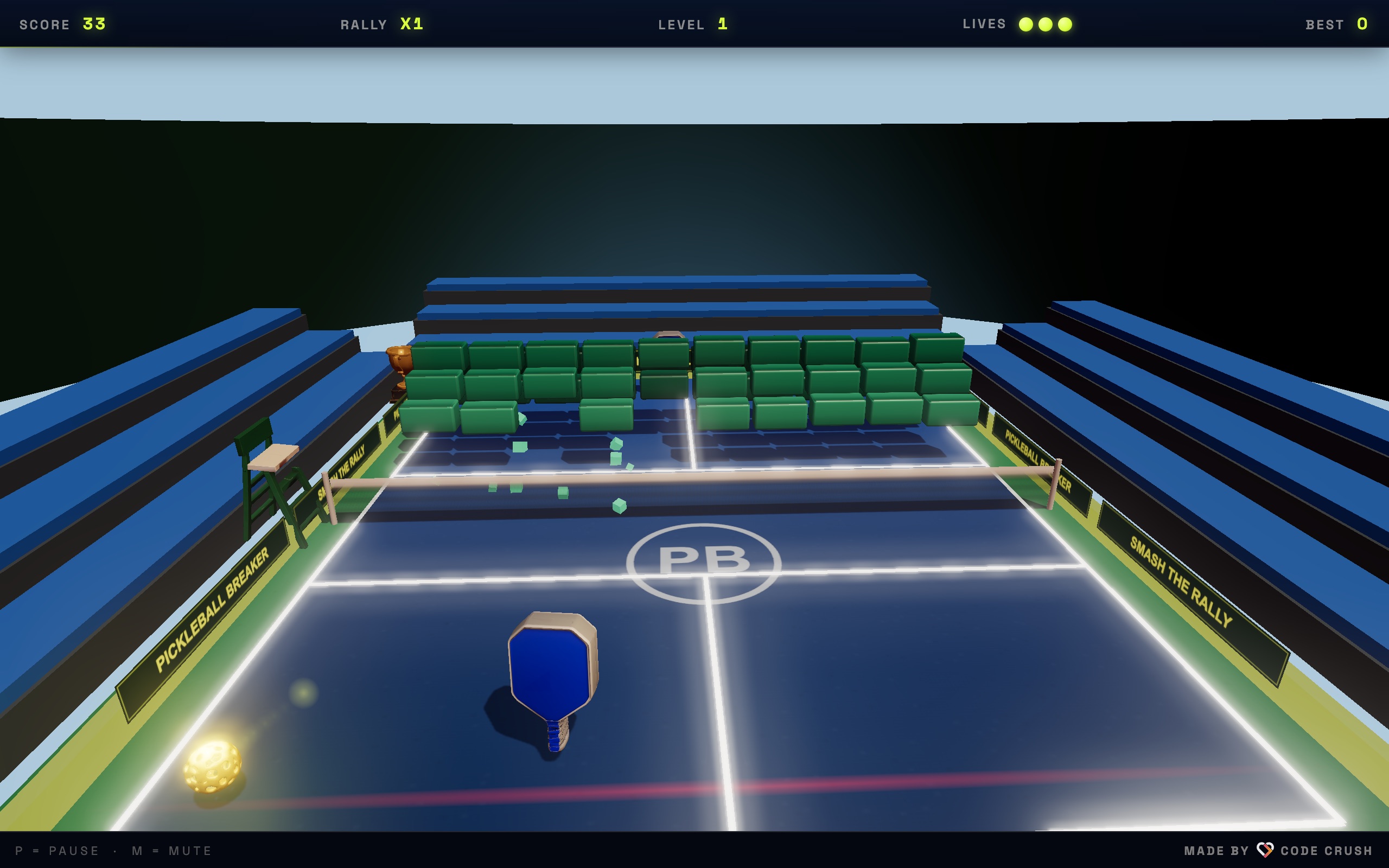
The game ships with two courts. Stadium is the classic arena under the lights. Mekong Night is the love letter to the resort: a floodlit court framed by palms, a thatched sala, and riverside villas — bespoke 3D models generated and tuned specifically for this project, arranged to mirror the real retreat's evening atmosphere.
Game feel is the game
A rally game lives or dies on how a hit feels. We tuned the juice in milliseconds: screen shake on smashes, hit flashes when targets pop, rally multipliers up to ×5, a heartbeat 3-2-1 countdown before every serve, and six power-ups (Defensive Wall, Multiball, Smash, Heavy Ball, Racket XL, Power Shot) that drop from smashed targets and stack into record-breaking combos.
Performance as a feature
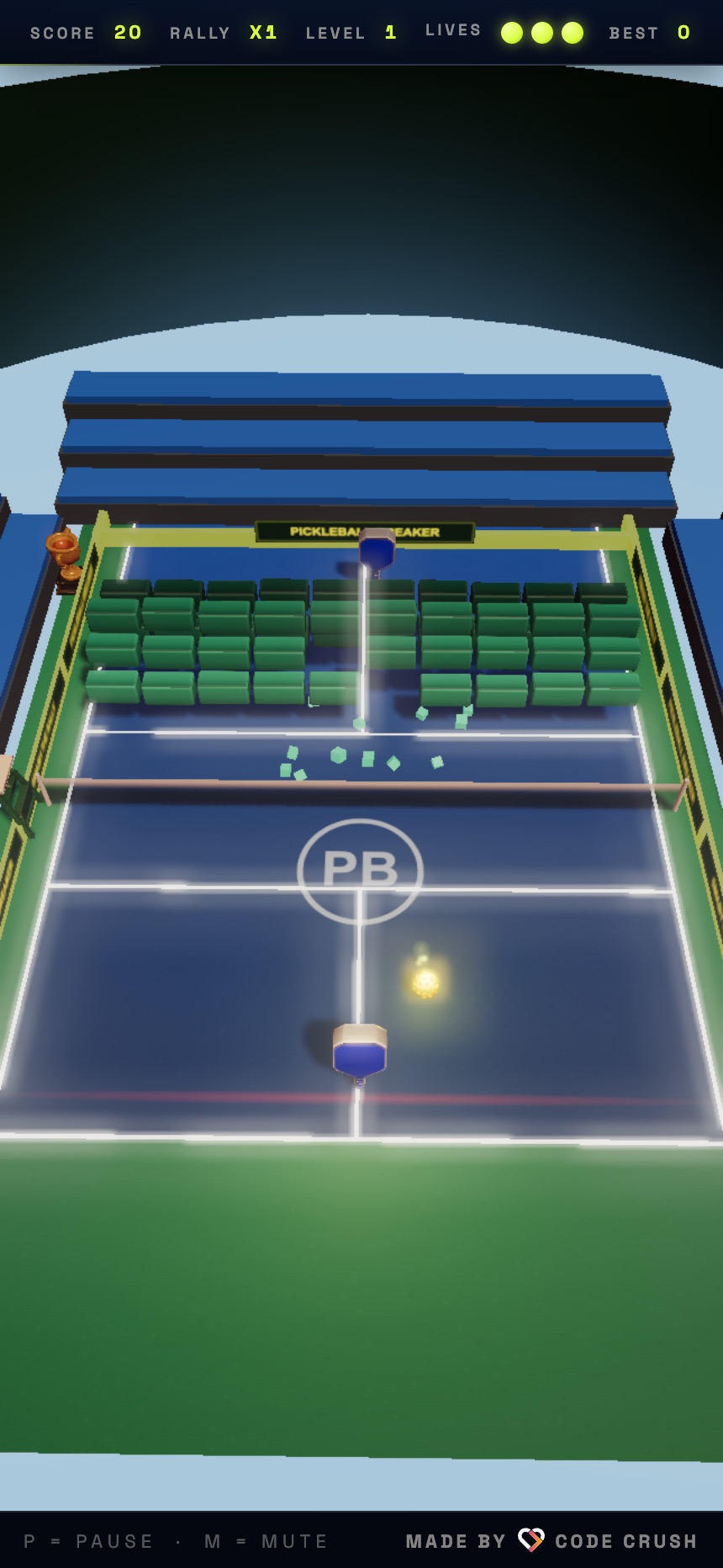
Here's the part nobody screenshots. iOS Safari enforces a hard GPU memory ceiling — cross it and the browser simply kills the tab. Our first resort build rendered 5.5 million triangles (the palms, sala, and villas are dense models, placed a dozen times), with soft shadows and a full-resolution framebuffer. It ran great on desktop and crashed iPhones on sight.
So we engineered the budget back down:
The result: the same game runs silky on an iPhone, not just on a gaming PC.
A leaderboard with real stakes
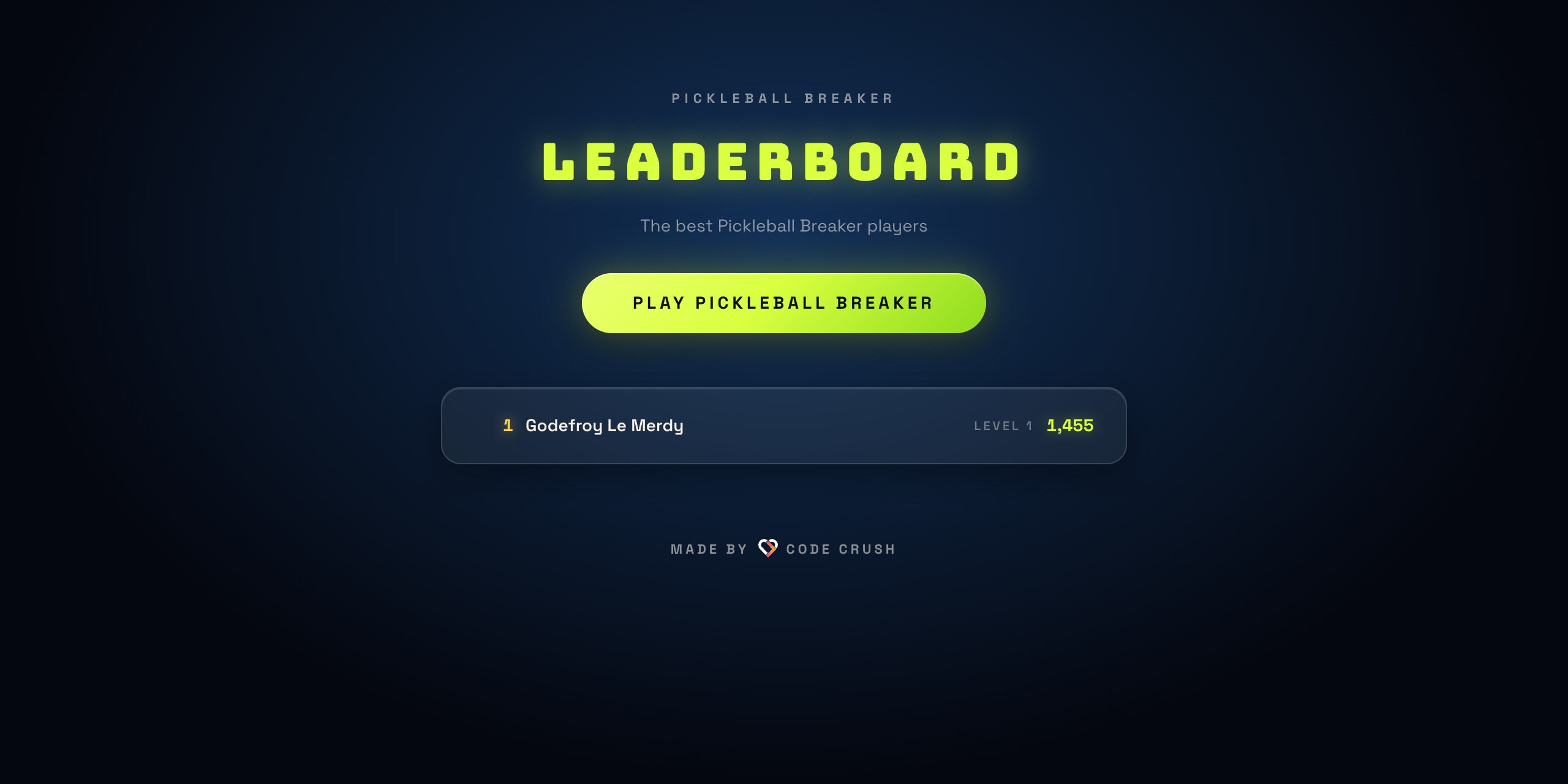
High scores are better when they're official. Players can sign in with Google (a stateless token handoff — no cookies, no accounts to manage), and their best score is saved automatically to a world leaderboard. The top 10 shows up right on the game screen, and the full ranking lives at sportkation.com/game/leaderboard — a page we styled to match the game's neon arcade look, down to the same fonts and glass panels.
The backend is real production infrastructure: a scores API on the main site, the game as its own cloud service, and the leaderboard page server-rendered fresh on every request.
Why It Works for Sportkation
The game is a brand touchpoint that costs nothing to distribute: a sixty-second rally on the bus, a lunch-break tournament between colleagues, a first taste of pickleball for someone who's never held a paddle. Every share is an invitation to the resort — and every score on the leaderboard is a reason to come back tomorrow.
It's live, free, and waiting for challengers: play Pickleball Breaker — then read Sportkation's own side of the story on the Sportkation blog.
Designed and built by Code Crush for Sportkation — gameplay, 3D art direction, mobile performance engineering, leaderboard backend, and cloud deployment. New courts and seasonal tournaments are on the roadmap.
Tagged with


